1. Folasaga
1.1. Ovaview
The Hager WITTY charging station is designed for charging electric vehicles in accordance with Mode 3 (IEC 61851-1) and Mode 2 standards. It supports both Type 3 and standard socket connections, offering flexible charging solutions for various electric vehicles. This device operates on a 3-phase + Neutral, 32A electrical supply, delivering power from 4 kW to 22 kW.
1.2. Faatonuga Saogalemu
- Installation must be performed by a qualified electrician in accordance with local and national electrical codes.
- Do not attempt to open or repair the charging station yourself. Contact qualified service personnel.
- Ia mautinoa ua sa'o le fa'a'ele'eleina o le nofoaga e fa'atumu ai le komepiuta.
- Do not use the charging station if it is damaged or shows signs of malfunction.
- Keep children and unauthorized persons away from the charging station during operation.
- Avoid exposing the charging station to extreme temperatures, direct sunlight for prolonged periods, or corrosive substances.
2. Fa'amatalaga o oloa
2.1. Vaega
- Compatible with Mode 3 (Type 3) and Mode 2 charging.
- Free access operation.
- Power output: 4 kW to 22 kW.
- Input: 3-phase + Neutral, 32A.
- Integrated status indicator light.
2.2. Vaega
The Hager WITTY charging station typically includes:
- Vaega o le nofoaga fa'atumu
- Mea fa'apipi'i (fa'amau, taula)
- Fa'aoga tusi lesona (lenei pepa)

Ata 1: Luma view of the Hager WITTY charging station with a green operational light, mounted on a textured wall.
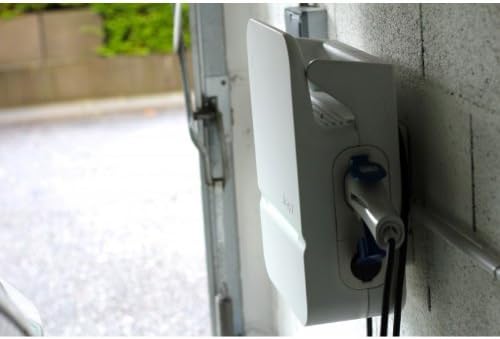
Ata 2: Itu view of the Hager WITTY charging station, illustrating the cable connection point and the unit's profile.
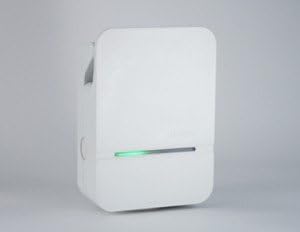
Ata 3: Fa'amatalaga pito i luma view of the Hager WITTY charging station, emphasizing the integrated green status light.
3. Seti
3.1. Nofoaga Fa'apipi'i
Choose a suitable location that is protected from direct impact, excessive moisture, and extreme temperatures. Ensure adequate ventilation and accessibility for maintenance.
3.2. Fa'amauina
- Mark the drilling points on the wall using the provided template (if applicable) or by measuring the mounting holes on the unit.
- Fa'a'eli pu ma fa'aofi taula talafeagai i le puipui.
- Secure the charging station to the wall using the provided screws.
3.3. Fesootaiga Eletise
LAPATAIGA: O le fa'apipi'iina o le eletise e tatau ona fa'atino e se fai eletise fa'apitoa.
- Ensure the main power supply is disconnected before beginning any electrical work.
- Connect the 3-phase + Neutral (3Ph+N) 32A power supply to the designated terminals inside the charging station.
- Ensure proper grounding is established.
- Verify all connections are secure and correctly wired according to the wiring diagram provided with the unit (refer to the separate installation guide for detailed diagrams).
- Close the charging station cover securely.
4. Faʻagaioiga
4.1. Starting a Charge
- Ensure the charging station is powered on and the status indicator light is green (ready).
- Connect the charging cable to your electric vehicle's charging port.
- Connect the other end of the charging cable to the charging station's outlet (Type 3 or Mode 2 socket).
- The charging station will automatically initiate the charging process. The status indicator light may change to blue or flashing green, depending on the charging status.
4.2. Stopping a Charge
- Disconnect the charging cable from your electric vehicle first.
- Disconnect the charging cable from the charging station.
- The charging station will return to a ready state (green indicator light).
4.3. Fa'ailoga Tulaga
- Molī lanumeamata: Ready for charging.
- Blue Light (or flashing green): O lo'o fa'agasolo le totogi.
- Red Light (or flashing red): Error or fault detected. Refer to the Troubleshooting section.
- Leai se Malamalama: Power off or system fault.
5. Tausiga
5.1. Fa'amamaina
Fa'amama le pito i fafo o le mea e fa'amu ai uta i se mea vaivai, oamp cloth. Do not use abrasive cleaners, solvents, or harsh chemicals. Ensure the unit is powered off before cleaning.
5.2. Asiasiga
Periodically inspect the charging station for any signs of damage, wear, or loose connections. Check the charging cable for fraying or damage. If any damage is found, discontinue use and contact a qualified technician.
6. Faʻafitauli
| Fa'afitauli | Mafuaaga e ono tupu | Fofo |
|---|---|---|
| No power/No light | Power supply disconnected; Circuit breaker tripped. | Check power supply; Reset circuit breaker. If problem persists, contact a qualified electrician. |
| moli moli mumu | Internal fault; Overcurrent; Ground fault. | Disconnect and reconnect the vehicle. If the error persists, power cycle the unit. If still red, contact service. |
| E le'i amataina le totogi | Cable not properly connected; Vehicle not ready to charge; Charging station fault. | Ensure cable is securely connected to both vehicle and station. Check vehicle's charging status. Power cycle the charging station. |
7. Fa'amatalaga
| Fa'aaliga | Fa'amatalaga |
|---|---|
| Fa'ata'ita'iga | XEV103 |
| Faiga Fa'atonu | Mode 3 (IEC 61851-1), Mode 2 |
| Ituaiga Feso'ota'i | Type 3 / Standard Socket |
| Sao Voltage | 3-phase + Neutral |
| Max Nei | 32A |
| Malosiaga | 4 kW i le 22 kW |
| Avanoa | Avanoa Sa'oloto |
| ASIN | B00CSJUVKA |
8. Fa'amaonia ma Lagolago
For warranty information and technical support, please refer to the official Hager website or contact your local Hager distributor. Keep your purchase receipt for warranty claims.
Spare parts availability: Information not available.


