Ua Umaview
This CURT Class 3 Trailer Hitch is designed for serious towing, offering a vehicle-specific fit and robust weight capacity. It features a 2-inch receiver tube and is tested to SAE J684 standards for safety. The hitch is constructed from high-strength steel with precision welding and protected by a dual-coat finish for superior resistance to rust, chipping, and UV damage.
Vaega Autu
- Dependable Strength: Rated for 6,000 lbs. Gross Trailer Weight (GTW) and 600 lbs. Tongue Weight (TW). Compatible with weight distribution hitches for 10,000 lbs. WD and 1,000 lbs. WDTW.
- Fuafuaga sili: Equipped with a standard 2-inch x 2-inch hitch receiver.
- Fully Tested: Design tested in real-world, on-vehicle conditions at our Detroit engineering facility, meeting SAE J684 standards.
- Rust, Chip, UV-Resistant: Protected with a dual-coat finish of rust-resistant liquid A-coat and durable black powder coat.
- Faigofie e Fa'apipi'i: Custom, factory fit on select model years of Ram 1500, 2500, 3500 and Dodge Ram 1500, 2500, 3500.

Image: A representative image of the CURT Class 3 Trailer Hitch, highlighting its vehicle-specific design, industry-leading dual-coat finish, standard hitch receiver, and fully tested design.
Fegalegaleaiga
This CURT 13333 Class 3 Trailer Hitch is custom-fit for select model years of the Ram 1500, 2500, or 3500 and Dodge Ram 1500, 2500, or 3500. Please verify your vehicle's specific year and model for compatibility.
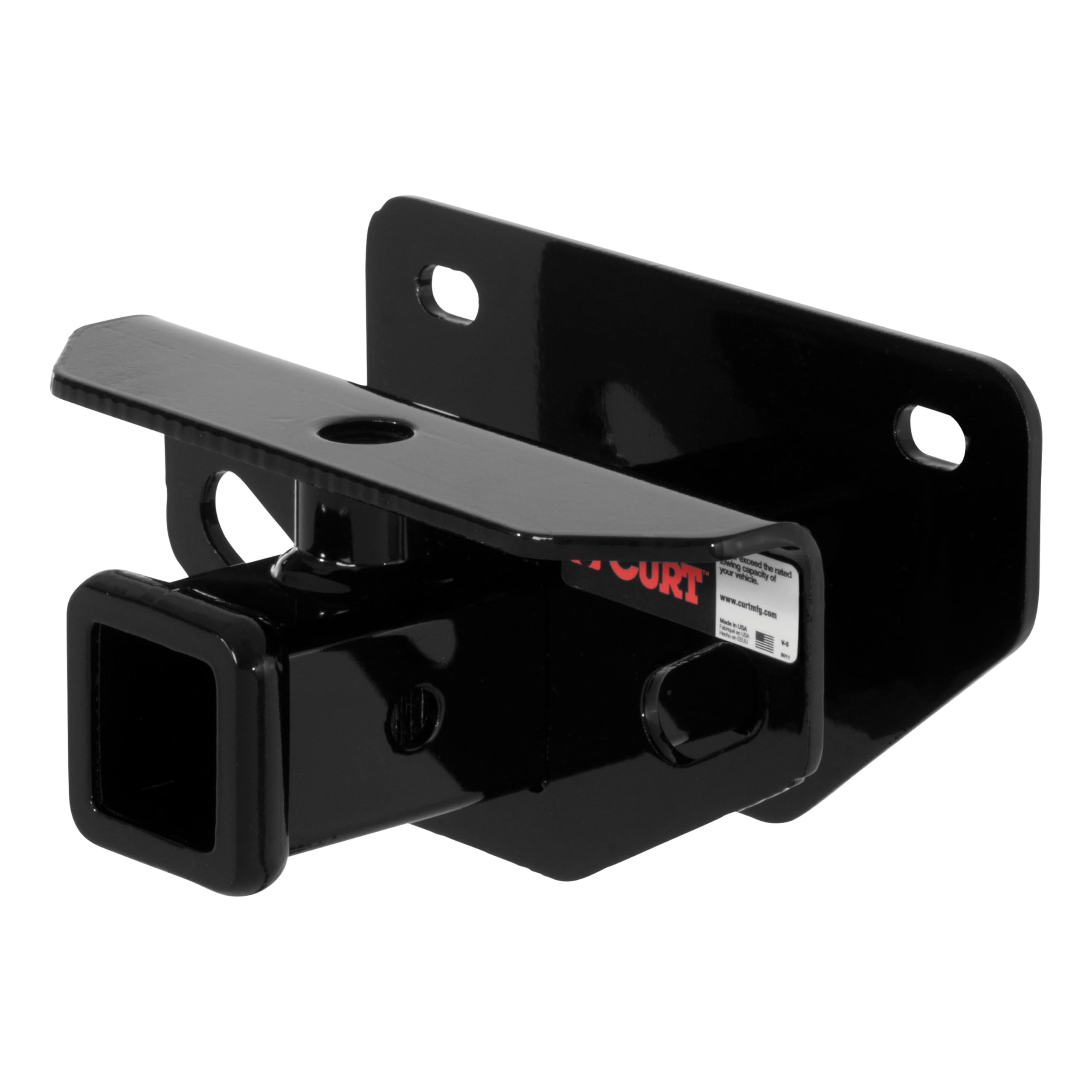
Image: An icon indicating the receiver tube size is 2 inches.

Image: A diagram illustrating that vertical hanging bike racks are not compatible with this hitch, but standard and tray-style bike racks are.
Lisi Vaega
The CURT 13333 Class 3 Trailer Hitch package includes:
- 1x Class 3 Hitch
- All necessary mounting hardware (bolts, nuts, washers, fish wire)
Fa'atonuga fa'apipi'i
Before beginning installation, ensure you have all necessary tools and safety equipment, including safety glasses and gloves. Refer to the detailed instructions provided with your hitch for vehicle-specific steps and torque specifications.
Laasaga Fa'apipi'i Lautele
- Inspect Vehicle Frame: Ensure the vehicle's frame is in suitable condition for installation, free from damage or excessive corrosion.
- Aveese Fa'alavelave: Temporarily remove any components that obstruct the installation area, such as exhaust hangers or bumper fascia, as indicated in your specific instruction sheet.
- Clean Weldnuts (if applicable): If your vehicle's frame has weld nuts that are corroded, clean them using a wire brush and penetrating lubricant. For extreme cases, a thread tap matching the hardware size may be necessary.
Video: This video demonstrates techniques for cleaning weld nuts on a vehicle frame, which may be necessary before installing a trailer hitch.
- Position the Hitch: Carefully raise the hitch into position against the vehicle's frame. Use jack stands or a second person to help hold the hitch in place. Ensure the hitch is level and all attachment points align.
- Fishwiring Hardware (if applicable): For attachment points within enclosed frame sections, use the provided fish wire to guide bolts and spacer plates into position.
Video: This video illustrates the fishwiring technique for installing hardware in enclosed frame sections, a common method for hitch installation.
- Drill Attachment Holes (if required): If your specific installation requires drilling new holes, use the hitch as a template to mark the locations. Drill a pilot hole, then gradually enlarge it to the required size using a cobalt drill bit with coolant.
Video: This video demonstrates the technique for drilling new attachment holes in the vehicle frame, if necessary for hitch installation.
- Secure the Hitch: Attach the hitch to the vehicle frame using the provided hardware. Hand-tighten all bolts initially.
- Torque All Fasteners: Once all bolts are in place and hand-tightened, use a torque wrench to tighten them to the exact torque specifications provided in your instruction sheet. It is crucial to follow these specifications to ensure a secure and safe installation.
- Reinstall Removed Parts: Reattach any exhaust components, bumper fascia, or other parts that were temporarily removed during installation.
Video: This video demonstrates the process of lowering and reattaching the exhaust system, which may be required during hitch installation.
Video: This video provides guidance on trimming the bumper fascia, a step that might be necessary for certain vehicle models during hitch installation.

Image: The CURT Class 3 Trailer Hitch installed on a vehicle, showcasing the 2-inch receiver tube below the bumper.
Fa'atonuga o Galuega
This Class 3 hitch is designed for towing various trailers, including utility trailers, boat trailers, campers, snowmobile, or ATV haulers.
Gafatia Toso
- mamafa o le taavale toso (GTW): 6,000 lbs.
- Tongue Weight (TW): 600 lbs.
- Weight Distribution (WD): 10,000 lbs.
- Weight Distribution Tongue Weight (WDTW): 1,000 lbs.
NOTE: Never exceed the lowest-rated towing component (vehicle, hitch, or trailer).
Video: This video explains the different classes of hitches and their respective weight-bearing capacities, providing essential information for safe towing.
Tausiga
Regular maintenance ensures the longevity and safe operation of your CURT trailer hitch.
- Su'esu'e e le aunoa: Periodically inspect the hitch for any signs of wear, damage, or corrosion.
- Fa'amama ma Lubricate: Keep the receiver tube clean and free of debris. Lubricate moving parts as needed.
- Puipui Fa'auma: The dual-coat finish provides excellent protection against rust, chipping, and UV damage. Avoid harsh chemicals that could compromise the coating.
Fa'afitauli
Mataupu masani
- Difficulty Threading Bolts: If weld nuts are corroded, refer to the "Weldnut Cleaning" section in the installation instructions. Use a wire brush or thread tap to clear the threads.
- Hitch Not Aligning: Ensure all obstructions are removed and the hitch is properly supported during installation. Re-check vehicle compatibility.
Fa'amatalaga
| Fa'aaliga | Fa'amatalaga |
|---|---|
| Fa'ailoga | CURT |
| Fa'ata'ita'iga | 13333 |
| Mea mamafa | 13 pauna |
| Fua o Mea | 11.3 x 8.9 x 7 inisi |
| Mea | Uamea Carbon |
| Faauma Ituaiga | GLOSS BLACK POWDER COAT |
| Tele o le Receiver | 2-Inisi |
| O le mamafa o le taavale toso (GTW) | 6,000 lbs. |
| mamafa o le laulaufaiva (TW) | 600 lbs. |
| Weight Distribution (WD) | 10,000 lbs. |
| Weight Distribution Tongue Weight (WDTW) | 1,000 lbs. |
Fa'amatalaga Saogalemu
Lapataiga Fautuaga 65: O lenei oloa e ono iai ni vaila'au e iloa e le Setete o Kalefonia e mafua ai le kanesa, fa'aletonu o le fanau mai, po'o isi fa'alavelave fa'atama.
Always ensure all towing components (vehicle, hitch, and trailer) are rated for the load being towed. Never exceed the lowest-rated component's capacity.
Fa'amaonia ma Lagolago
For warranty information or technical support, please refer to the documentation included with your product or visit the official CURT webnofoaga.


