
1. Folasaga
This instruction manual provides essential information for the safe and effective use of the CSCPEXCZ PEC Fuse SBFW-L M6 Series. These fuses are designed to protect electrical circuits from overcurrent conditions, preventing damage to components and ensuring system integrity. Please read this manual thoroughly before installation and operation.
2. Fa'amatalaga Saogalemu
- Always disconnect power to the circuit before installing or replacing fuses. Failure to do so can result in electric shock or injury.
- Ensure the replacement fuse has the correct amperage rating for the circuit. Using a fuse with an incorrect rating can lead to inadequate protection or unnecessary blowing.
- Do not attempt to repair or modify a blown fuse. Replace it with a new, identical fuse.
- Consult a qualified electrician if you are unsure about any aspect of fuse installation or circuit wiring.
- Keep fuses out of reach of children.
3. Oloa Ua Ovaview
The CSCPEXCZ PEC Fuse SBFW-L M6 Series consists of high-quality bolt-down fuses designed for various DC applications, including measurement monitoring and relay systems. These fuses feature a robust construction with a clear amperage rating for easy identification. They are available in a range of current ratings from 30A to 200A to suit diverse circuit protection needs.
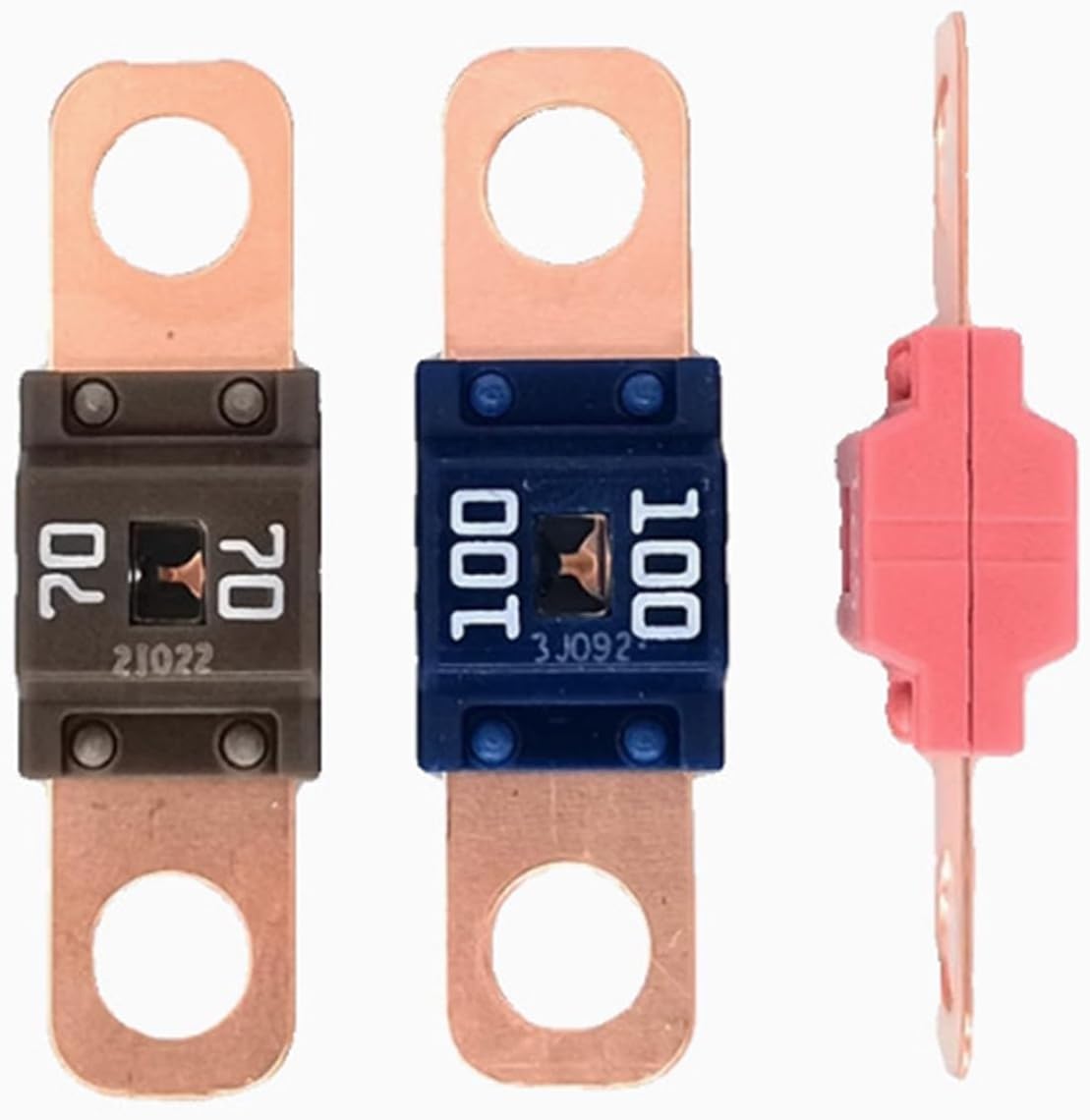
Image: Various PEC Fuses (70A, 100A) and a side profile, illustrating the product design.

Image: A selection of CSCPEXCZ PEC Fuses from the SBFW-L M6 Series, showcasing the range of available ampvaitausaga.
4. Fa'amatalaga
The following table details the technical specifications for the SBFW-L M6 Series fuses:
| Fa'aaliga | Fa'amatalaga |
|---|---|
| Numera Fa'ata'ita'i | SBFW-L M6 Series |
| Fa'ailoga o lo'o iai nei | 30A, 40A, 60A, 80A, 100A, 125A, 150A, 175A, 200A |
| Faatulagaina Voltage | DC58V |
| Gagana Gagana | 1000A |
| Galulue Vevela | -40°C i le 120°C |
| Tulaga | ISO8820-5 |
| Fautuaina Torque | (6.0 ± 1.0) N·m |
| Fa'atatauga | Measurement monitoring, relay systems |
| Ituaiga | Module |
| Weight (30A-100A) | Approx. 2g per fuse |
| Weight (125A-200A) | Approx. 3g per fuse |

Image: Technical specifications table for the SBFW-L M6 series fuses.
Fua
| Fua | Taua |
|---|---|
| Aotelega Umi | 41 mm |
| Avanoa o Puga | 30 mm |
| Pua Fa'amau | 6.2 mm |
| Lautele | 12 mm |
| Height (30A-100A) | Pe tusa. 8 mm |
| Height (125A-200A) | Pe tusa. 10 mm |

Image: Dimensional drawing of the SBFW-L M6 fuse.
5. Seti ma Fa'apipi'i
- Select the Correct Ampvaitausaga: Identify the required amperage for your circuit. This fuse series offers ratings from 30A to 200A. Ensure the chosen fuse matches the circuit's design specifications.
- motusia le Malosi: Before beginning any installation, ensure that all power to the circuit is completely disconnected at the source.
- Saunia le nofoaga e fa'apipi'i ai: These are bolt-down fuses. Ensure you have appropriate mounting hardware (not included) and a secure location for installation.
- Install the Fuse: Place the fuse into its holder or directly onto the connection points. Secure it using bolts through the M6 holes on the fuse terminals. Apply the recommended torque of (6.0 ± 1.0) N·m to ensure a secure electrical connection.
- Fa'amaonia So'oga: Double-check all connections to ensure they are tight and free from any loose wires or debris.
- Faʻafoʻi Mana: A maeʻa le faʻapipiʻiina ma faʻamaonia, toe faʻafoʻi ma le faʻaeteete le eletise i le matagaluega.

Image: A 30A CSCPEXCZ PEC Fuse, illustrating a specific amperage variant.

Image: A 200A CSCPEXCZ PEC Fuse, illustrating a specific amperage variant.
6. Fa'atonuga o Galuega
The PEC Fuse SBFW-L M6 Series operates passively as a safety device. When the current flowing through the circuit exceeds the fuse's rated amperage for a sustained period, the internal element will melt, breaking the circuit and preventing damage to downstream components. No user interaction is required during normal operation.
7. Tausiga
- Asiasiga masani: Periodically inspect the fuses and their connections for any signs of corrosion, overheating (discoloration), or physical damage.
- Suiga: If a fuse blows, it indicates an overcurrent event. After identifying and rectifying the cause of the overcurrent, replace the blown fuse with a new fuse of the exact same amperage rating and type (SBFW-L M6 Series).
- Fa'amamaina: Ensure the fuse terminals and surrounding area are kept clean and free of dust or debris to maintain optimal electrical contact.
8. Faʻafitauli
Fuse Blows Repeatedly
- Ova le uta: The circuit may be drawing more current than the fuse is rated for. Check the total load on the circuit.
- La'au pu'upu'u: A direct short circuit can cause a fuse to blow instantly. Inspect wiring and connected devices for shorts.
- Faulty Component: A component in the circuit may be malfunctioning and drawing excessive current.
- Incorrect Fuse Rating: Ensure the fuse installed has the correct amperage rating for the circuit. Never use a higher-rated fuse than specified.
If a fuse blows, always investigate the cause before replacing it. Simply replacing a blown fuse without addressing the underlying issue can lead to further damage or safety hazards.
9. Fa'amaonia ma Lagolago
For warranty information or technical support regarding your CSCPEXCZ PEC Fuse SBFW-L M6 Series, please refer to the retailer or contact CSCPEXCZ customer service directly. Keep your purchase receipt as proof of purchase.